
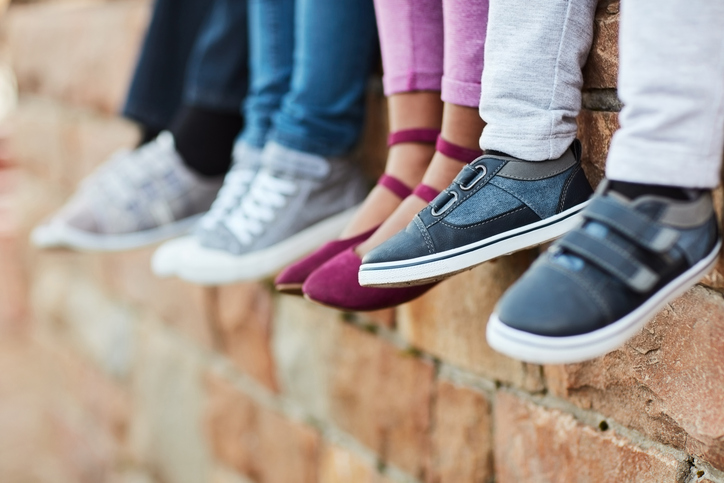
A new school year means new backpacks, new schedules, new activities and often, new shoes.
Between walking through school hallways, gym class, recess, after-school sports, and activities, kids can spend a lot of time on their feet. Making foot health part of your back-to-school routine can help keep them comfortable, active, and ready for the year ahead.
Here are a few simple ways parents can help protect growing feet.
Start the School Year With Properly Fitting Shoes
Kids’ feet can grow quickly, so last year’s shoes may not fit as well as they appear to.
Before buying new school shoes, have both feet measured while your child is standing. Since one foot may be slightly larger than the other, shoes should be selected to comfortably fit the larger foot.
A good shoe should:
- Feel comfortable from the start
- Provide enough room for the toes to move
- Have a supportive heel
- Bend near the ball of the foot rather than through the middle
- Stay securely on the foot without slipping at the heel
- Be appropriate for your child’s daily activities
Avoid buying shoes that are too large with the expectation that your child will “grow into them.” Shoes that don’t fit properly can cause irritation and make it harder for children to walk, run, and play comfortably.
Don’t Expect Kids to “Break In” New Shoes
New shoes shouldn’t hurt.
If your child complains that a shoe pinches, rubs, or feels uncomfortable in the store, don’t assume it will eventually feel better. The American Podiatric Medical Association recommends choosing children’s shoes that are comfortable immediately rather than requiring a break-in period.
Have your child walk around in the shoes before purchasing them and wear the same type of socks they’ll normally wear to school.
After they begin wearing the shoes, watch for redness, blisters, or other areas of irritation.
Check Their Shoes Throughout the School Year
Back-to-school shoe shopping shouldn’t be the last time you think about shoe fit until next fall.
Children’s shoe and sock sizes can change every few months as their feet grow. Kids can also wear through the soles and heels of their shoes surprisingly quickly.
Every so often, check for:
- Worn or flattened soles
- Uneven wear
- Damaged heels
- Toes pressing against the front of the shoe
- Complaints that shoes suddenly feel tight
- Redness or irritation after wearing shoes
Uneven shoe wear may also be a reason to have your child’s feet evaluated by a podiatrist.
Choose the Right Shoes for Sports
School sneakers aren’t necessarily the right shoes for every activity.
Different sports place different demands on the feet and ankles. Basketball, soccer, running, tennis, and other activities involve different movements, surfaces, and types of support.
Sport-specific footwear is designed to provide support for those movements. For example, activities involving frequent side-to-side movement may require different stability than activities primarily involving forward motion.
Make sure athletic shoes fit properly, are appropriate for the sport and playing surface, and are replaced when they become excessively worn.
Keep Feet Clean and Dry
Busy school days, gym class, and sports can mean sweaty feet.
Encourage kids to wash their feet regularly and dry them thoroughly, especially between the toes. Clean socks should be worn each day, and damp socks should be changed after sports or other activities when possible.
Shoes should also have time to dry between uses.
These habits can help reduce the warm, damp environment in which fungal infections such as athlete’s foot thrive.
Don’t Share Shoes
Hand-me-down clothing can be great. Shoes are different.
Shoes gradually conform to the shape and walking pattern of the person wearing them, so a pair that fit one child well may not properly fit another.
Sharing footwear may also increase exposure to fungal infections such as athlete’s foot and toenail fungus.
Whenever possible, children should have footwear that has been properly fitted specifically for them.
Pay Attention to Foot and Ankle Pain
Kids don’t always tell parents when something hurts.
Instead, you may notice changes such as:
- Limping
- Frequently taking their shoes off
- Avoiding activities they normally enjoy
- Complaining about tired or sore feet
- Repeatedly tripping
- Walking differently
- Swelling
- Redness
- Uneven shoe wear
Persistent foot or ankle pain shouldn’t simply be dismissed as “growing pains.”
Foot pain can have many causes, from poorly fitting shoes and overuse to sports injuries and conditions affecting growing feet. If pain continues, interferes with activity, or changes the way your child walks, a podiatric evaluation can help determine what’s causing it.
Take Sports Injuries Seriously
Back-to-school season also means the return of fall sports.
Ankle sprains and other foot and ankle injuries are common among active children and adolescents. If your child experiences an injury, don’t encourage them to simply “play through it.”
Pain, swelling, difficulty bearing weight, or an inability to return comfortably to normal activity should be evaluated.
Proper treatment and rehabilitation are important for helping young athletes safely return to their sport and reducing the chance of recurring problems.
Start the School Year on the Right Foot
Healthy feet help kids participate in everything the school year has to offer—from walking between classes and playing at recess to competing on the field.
Properly fitting shoes, good foot hygiene, sport-specific footwear, and paying attention when something doesn’t seem right can go a long way toward keeping children’s feet healthy.
If your child is experiencing persistent foot or ankle pain, frequent injuries, unusual shoe wear, walking changes, ingrown toenails, or another foot concern, Caruso Foot & Ankle is here to help.
Schedule an appointment with Dr. Rose Caruso and start the school year on the right foot.
This article is intended for general educational purposes and should not replace individualized medical advice, diagnosis, or treatment from a qualified healthcare professional.
Sources
- American Podiatric Medical Association (APMA). Buying Children’s Footwear. Guidance on measuring children’s feet, proper shoe fit, shoe wear, hand-me-down footwear, and choosing shoes that are comfortable immediately.
- American Podiatric Medical Association (APMA). Helpful Kids Shoe Shopping Tips. Back-to-school guidance covering heel support, toe flexibility, shoe stability, proper sizing, and signs of irritation.
- American Podiatric Medical Association (APMA). Today’s Podiatrist Keeps Kids Active. Information about common pediatric foot and ankle concerns and the importance of evaluating persistent foot pain.
- American Podiatric Medical Association (APMA). Footwear for Teenagers. Guidance on sport-specific footwear, proper fit, support, and recognizing when athletic shoes need to be replaced.
- American Academy of Pediatrics (AAP). Ankle Sprain Treatment – Care of the Young Athlete. Pediatric guidance on ankle injuries, rehabilitation, strengthening, balance, and safe return to activity.
- American Academy of Pediatrics (AAP). Soccer Injuries in Children and Adolescents. Guidance regarding properly fitting athletic footwear and selecting footwear appropriate for the playing surface.